
How fast can you deliver during an emergency?
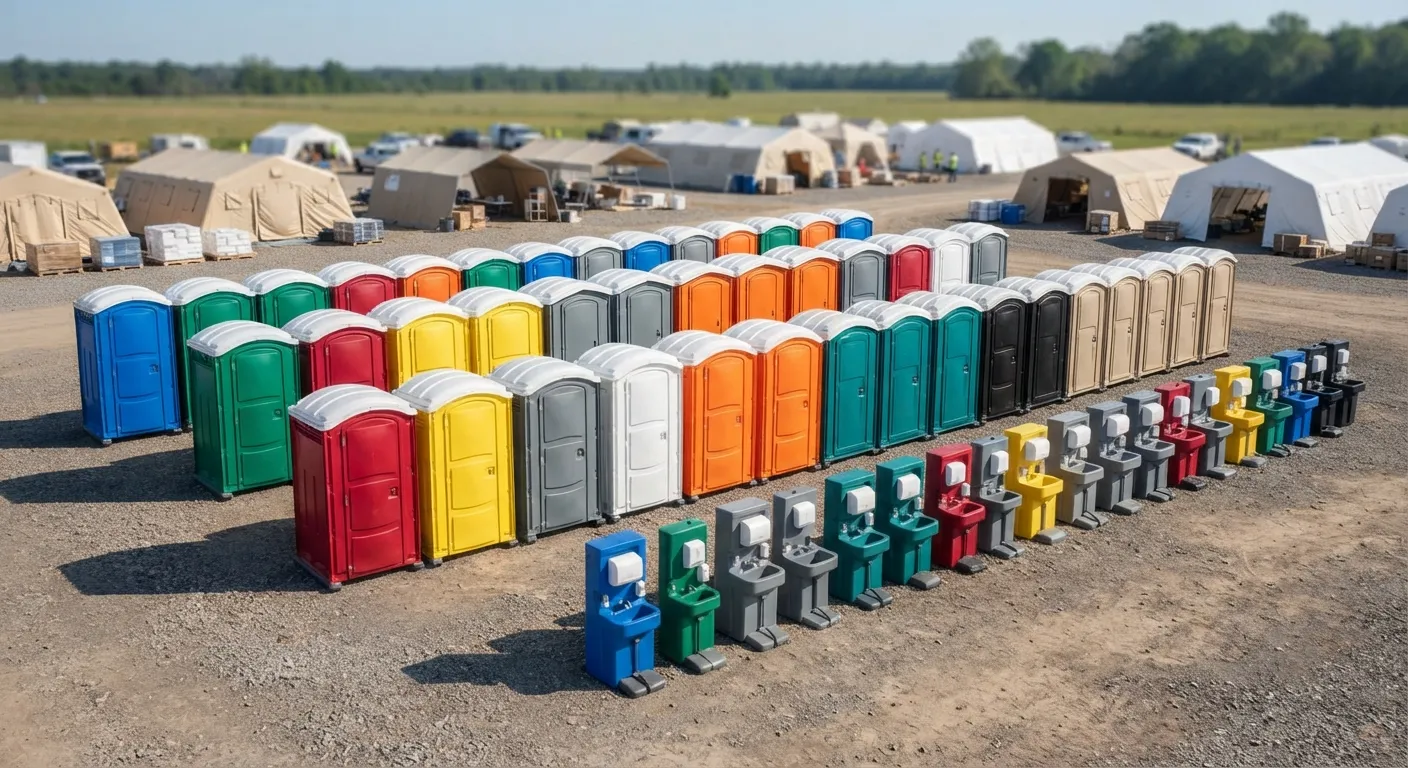
Speed depends on how many units you need and where the site sits relative to our staging. For a handful of standard porta potty rental units, same-day delivery is realistic once we confirm ground access and a level pad. Larger deployments, like a shelter or a multi-block outage zone, take more coordination but still move fast because disaster response is what emergency porta potty rental work is built for. We keep stock ready rather than ordering on demand, which is the difference between a two-hour wait and a two-day wait.
Sandy Springs sits close enough to Brookhaven, 6.2 miles south, and Roswell, 10.7 miles north, that we can pull units from either direction if one route is blocked by downed trees or flooding. That flexibility matters when a single storm knocks out power across several ZIP codes at once. If your address falls right on the city line, check our service areas page so we can route the closest available truck instead of guessing.
For sites without a paved pad, we still need a stable surface. ADA Standards section 302.1 calls for stable, firm, slip-resistant ground, and that requirement doesn't disappear just because it's an emergency. A gravel lot or packed lawn usually works. A mud pit doesn't, and setting a unit on unstable ground creates a tip hazard nobody needs during a crisis.
What sanitation setup works for a shelter or relief site?
A shelter needs more than a row of toilets. It needs handwashing, and it needs at least one accessible unit if people are gathering in numbers. OSHA 1926.51(c) sets the general ratio at one toilet for every 20 people, and that baseline is a reasonable starting point for planning even outside a construction context. Pair that count with handwashing station rental units nearby, since 29 CFR 1910.141(d)(2) requires soap and a towel or drying device at any washing facility, not just sanitizer.
Where units are clustered for a shelter population, ADA Standards section 213.2 requires at least 5 percent to be wheelchair accessible, never fewer than one. Our ADA accessible porta potty units meet the clearances that come with that rule, including a 60 inch turning circle under ADA Standards section 304.3.1 and a 36 inch clear route under section 403.5.1. If the relief site is feeding people too, a portable sink rental unit next to the food line covers a gap a single hand sanitizer stand can't.
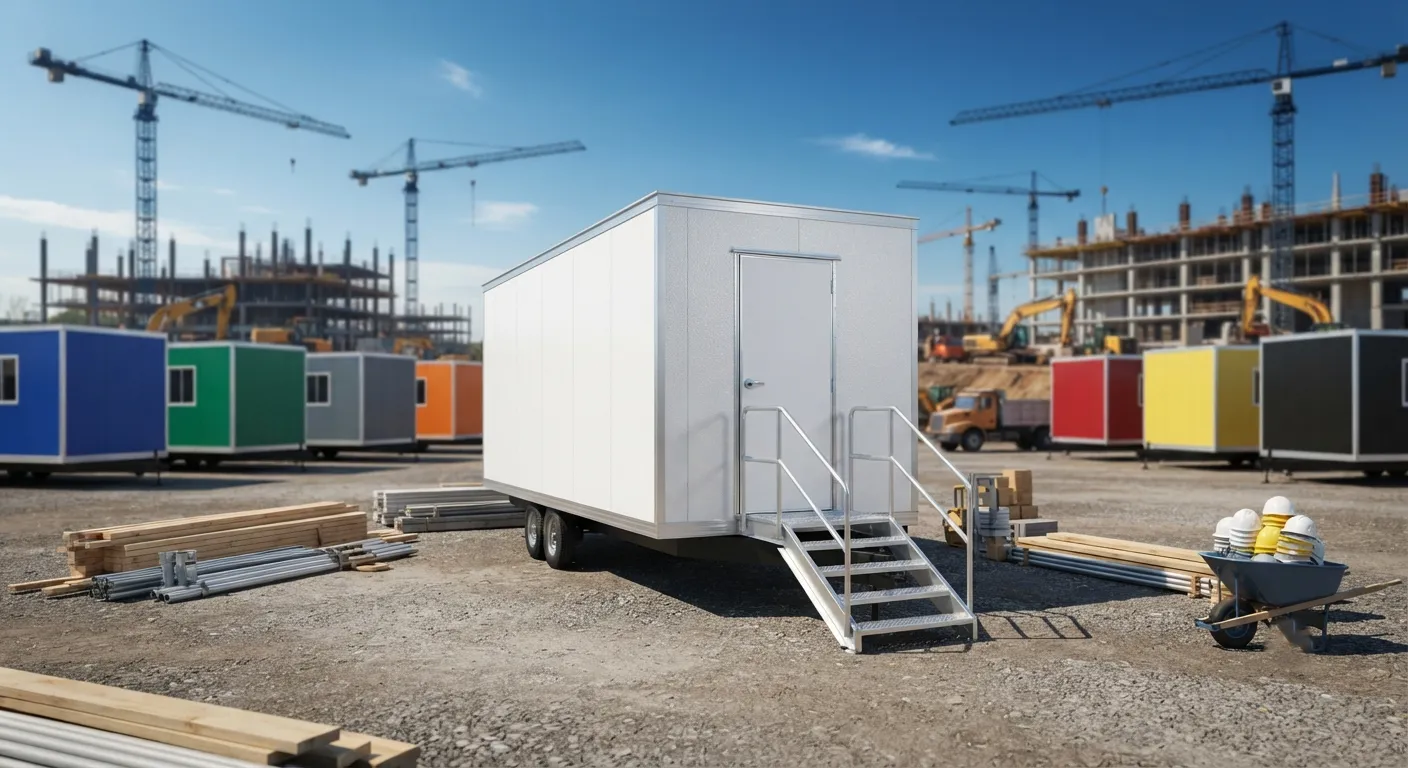
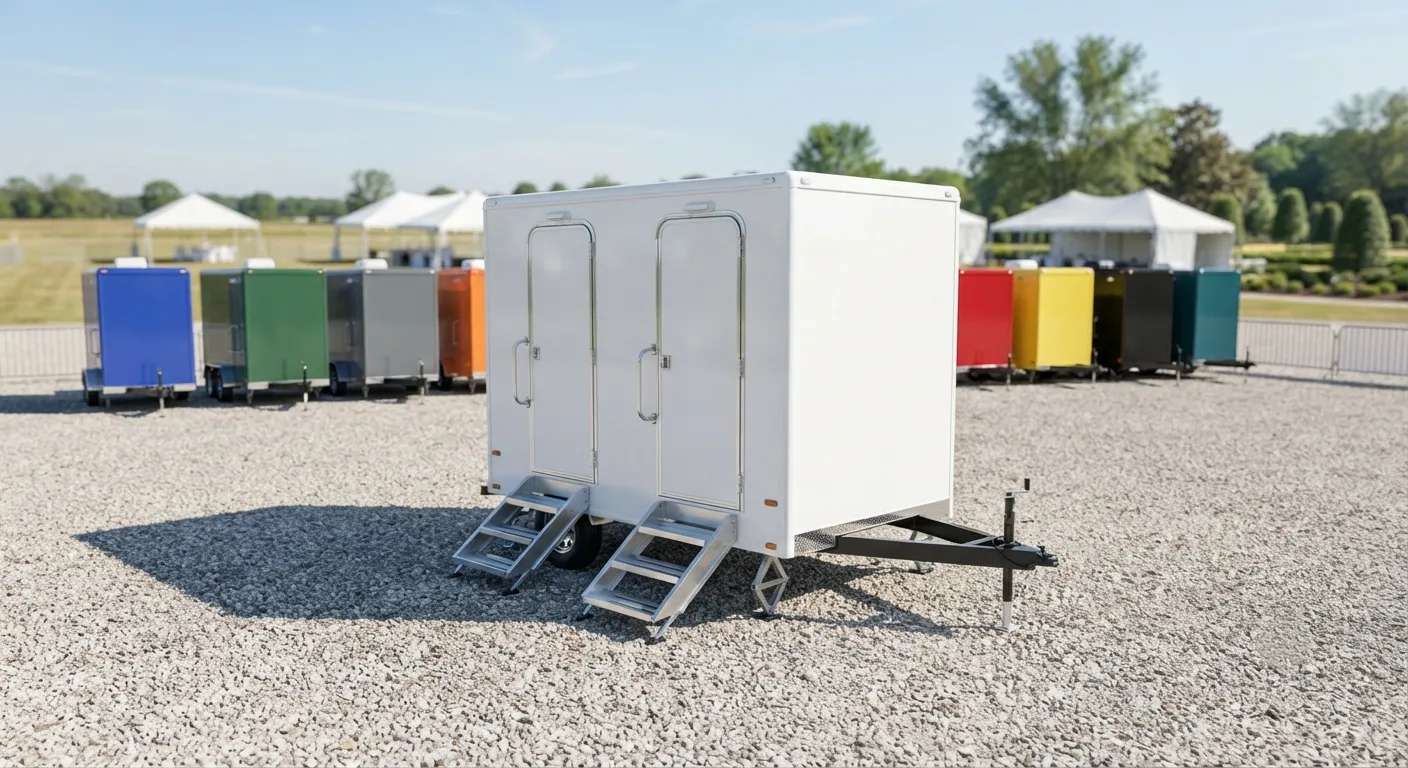
For displaced households staying longer than a few days, a restroom trailer rental gives more privacy and comfort than standard units, and a shower trailer rental matters once people have been without running water for a week. Both take more lead time than a standard delivery, so flag that need early rather than after the first night.
Where should units go when the situation is changing fast?
Placement in a disaster zone isn't the same as placement on a job site. Debris shifts, access roads close, and a spot that worked yesterday may be underwater today. Our porta potty placement guide covers the basics, but during active response we reassess daily rather than locking a plan in on day one. Illumination matters too if crews are working after dark; OSHA 1926.56(a) sets minimum lighting intensities for construction areas, and a relief site running generator power overnight should follow that same logic even though it isn't a construction site itself.
If debris removal is part of the recovery, a roll-off dumpster rental parked alongside the sanitation units keeps the whole site from turning into a hazard. Roll-off trucks need about 60 feet of straight clearance behind them to place the box, which matters on a narrow residential street with cars pushed to the curb by wind damage. Temporary fencing around a staging area, using temporary fence rental panels, keeps curious residents and kids away from generators, dumpsters and stacked supplies. If you're also running a light tower rental or a temporary power pole for the site, keep those clear of the fenced perimeter so service trucks can still get in.
Longer relief operations sometimes need equipment or supply storage too. A storage container rental or mobile office trailer rental gives responders a dry, lockable space that a tent can't match. Check porta potty permit requirements with the city before setup near a public right of way, since placement rules in an emergency are still not confirmed for every location and need a direct check with Sandy Springs rather than an assumption.
How many units does a shelter need?
Start with OSHA 1926.51(c): one toilet per 20 people as a baseline. A shelter housing 100 people needs at least 5 units, plus one accessible unit under ADA 213.2. Add handwashing stations near any food service area. See how many porta potties do I need for the full breakdown.
Do you charge more for emergency delivery?
Standard delivery fees run from 100 to 500 dollars depending on distance and timing, with rush service toward the higher end. Ask directly when you call so there's no surprise on the invoice. Compare against porta potty rental cost for baseline numbers.
Can you service units daily during an outage?
Yes, and daily service is common during active response when usage is heavy. ANSI/PSAI Z4.3 sets a weekly baseline for normal use, but a shelter or work camp often needs more frequent visits. We adjust the schedule based on headcount, not a fixed calendar.
What if the site has no water or power?
That's normal for disaster response. Standard units don't need a water hookup, and handwashing station rental units run on their own reservoir. A temporary power pole can supply electricity if a trailer unit needs it.
Will you deliver if roads are partially blocked?
We'll try every accessible route, including from our Brookhaven and Roswell coverage. Call ahead so we can check current conditions before dispatch. If your street is impassable, we'll stage nearby and confirm timing once it clears.
Next step
Get a delivery date
Tell us the address, the dates and the headcount. We size the order and confirm the route.