
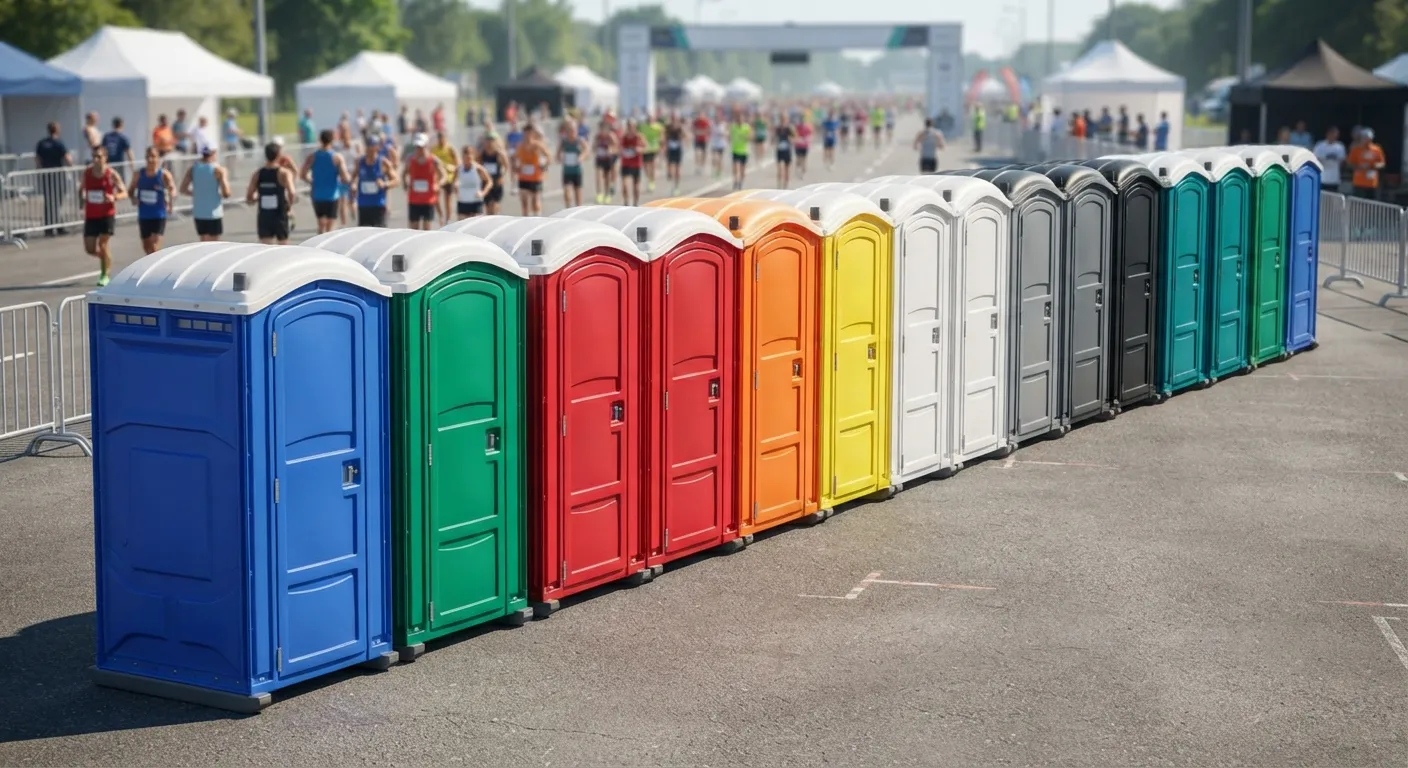
How many restrooms does a marathon need in Sandy Springs?
Runner count drives the number, but course layout matters just as much. A point-to-point marathon needs restrooms at the start corral, at aid stations along the route, and a bigger cluster at the finish where runners linger. Standard porta potty rental units work for most of the course, but the finish line area often calls for deluxe flushable units since that's where spectators and families wait the longest. OSHA 1926.51(c) sets ratios for construction crews, not runners, but race organizers in Sandy Springs use it as a starting baseline and then add units for spectator zones. A weekend marathon rental for a standard unit runs in the same range as any other weekend event rate, so budget early once your route is set. If your course crosses through Roswell, 10.7 miles north, or touches the Brookhaven line 6.2 miles south, you'll want restroom clusters on both sides of any timing mats so runners never backtrack. Every cluster needs at least one accessible unit under ADA Standards section 213.2, which requires 5 percent of clustered units to be accessible with a minimum of one. Pair that with a handwashing station near any fueling table, since sticky gel packets and sports drinks make hands messier than a typical portable toilet rental crowd. For bigger events, a restroom trailer rental at the finish line handles higher volume better than a bank of standalone units.
Where should restrooms go along the race course?
Placement follows water stops, not mile markers. Runners need a restroom option roughly every 2 to 3 miles once a race passes the two-hour mark, and that means positioning units where a course vehicle can actually reach them. A porta potty placement guide helps here: ADA Standards section 403.5.1 calls for a 36 inch clear path to any accessible unit, so avoid setting units on grass slopes or gravel shoulders where a wheelchair racer or handcyclist can't get close. ADA Standards section 405.2 caps ramp slope at 1:12, which matters if your course crosses a curb cut near a water station. Delivery trucks need roughly 60 feet of straight clearance to drop a unit, so tight neighborhood streets in Sandy Springs may need units staged in a nearby lot the morning of the race instead of curbside. If your race also needs light tower rental for a pre-dawn start or a temporary power pole for timing equipment at the finish, plan the power drop before you finalize restroom spots so cords and unit doors don't conflict. Knowing how to brace a temporary power pole matters here: for race-day timing gear or an announcer tent, anchor the base plate against a stable, level surface, stake guy wires at wide angles, and keep those wires clear of the runner corridor and any restroom queue line. GFCI protection under OSHA 1926.404(b)(1)(ii) applies to any temporary power run near water stations or wash sinks. For courses that loop back through a central hub, a portable restroom rental cluster at that hub can serve both an early mile marker and the final stretch, cutting the total unit count you need to rent.
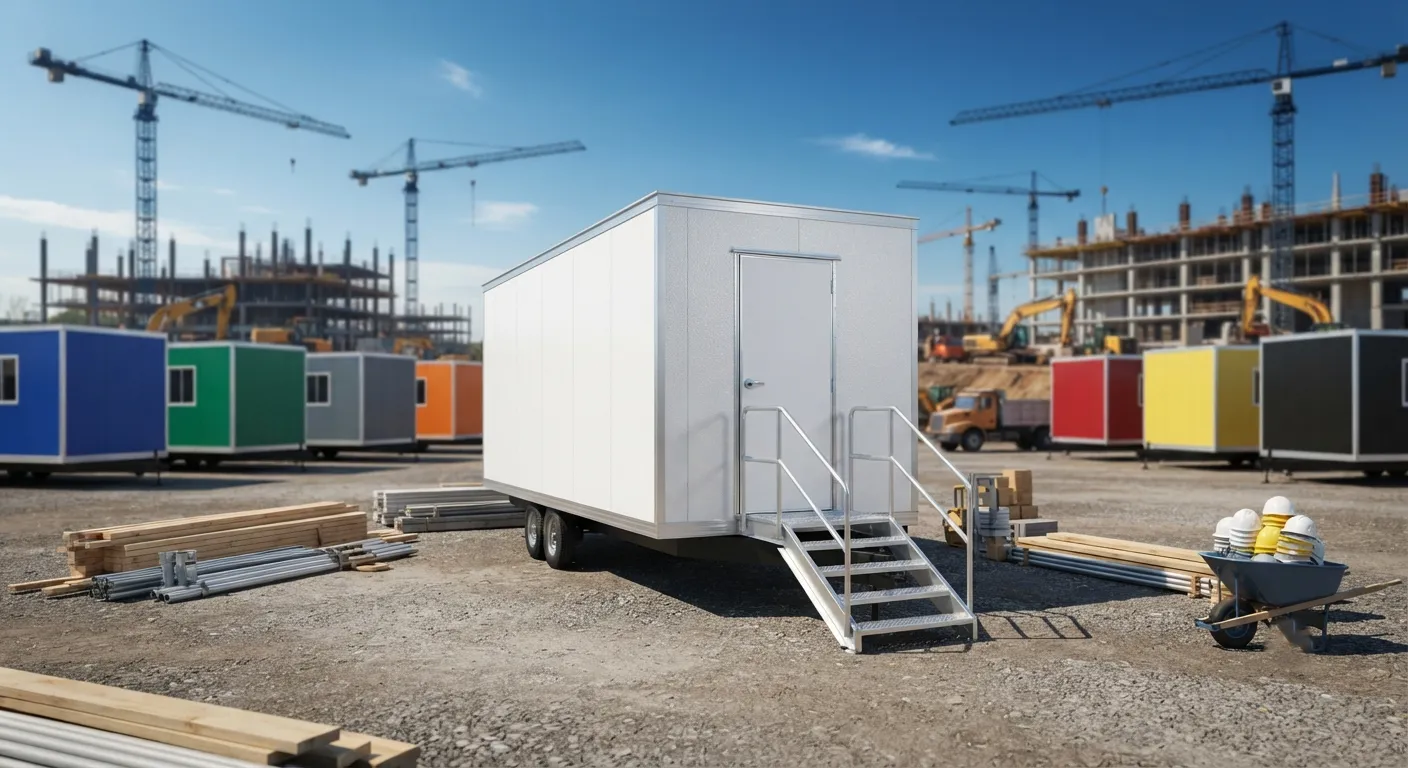
What does marathon restroom rental cost in Sandy Springs?
Cost depends on unit type, how many days you need them on site, and whether you need trailers for a VIP or finish-line area. A standard unit for a single event day typically runs in the range below, and a full weekend rental costs more than a one-day booking because setup and teardown both happen on the clock.
| unit | day | weekend |
|---|---|---|
| standard | $100-$350 | $125-$400 |
| ada | $200-$400 | $199-$300 |
| deluxe | $85-$1,200 | n/a |
A restroom trailer rental cost page breaks down bigger multi-stall options if your race draws a large spectator crowd. Most race organizers also pay a delivery fee, which the porta potty rental cost guide covers in detail. If your event runs multiple days, like a stage race or a festival weekend tied to a festival restroom rental setup, ask about a multi-day rate before booking single-day units for each day separately. Marathons that double as fundraising events sometimes pair restrooms with temporary fence rental to control crowd flow near the finish chute, and a crowd control barrier rental keeps runners separated from parked service vehicles.
How far in advance should I book restrooms for a marathon?
Book as soon as your course and runner count are set, ideally 60 to 90 days out for a race over 1,000 runners. Smaller local 5Ks in Sandy Springs can often book closer to the date, but ADA units and trailers get reserved first, so lock those early through request a quote.
Do I need an accessible restroom at every water station?
Not necessarily every station, but ADA Standards section 213.2 requires at least one accessible unit in any cluster of units, and clusters typically form at start, finish, and major aid stations. Spread accessible units across the course rather than stacking them all at one spot.
Can restrooms be moved mid-race if the course changes?
Units can be relocated between waves or heats if you've got a service window built into the schedule, but mid-race moves during an active run are unsafe and not something a driver can do near runners. Plan placement based on your final course map, not a tentative one.
What size crew handles restroom setup for a large race?
Crew size scales with unit count and site access, and courses with tight street closures need more staging trips than an open park layout. A how many porta potties do I need estimate helps size the order before crew scheduling starts.
Should restrooms be serviced during a multi-day race weekend?
Yes, especially for events spanning a Friday-to-Sunday format. ANSI/PSAI Z4.3 sets a baseline service interval of once weekly for light use, but race-weekend crowds need mid-event servicing, which how often are porta potties cleaned explains further.
Next step
Get a delivery date
Tell us the address, the dates and the headcount. We size the order and confirm the route.