
What Are the First Signs of a Full Septic Tank?
Drains that empty slower than usual are usually the first clue, and it tends to hit every fixture at once, not just one sink. If the tub, the washing machine and the kitchen sink all back up the same week, the tank is telling you something. Gurgling from the toilet after a flush is next, caused by air trying to push past wastewater that has nowhere to go. Some homeowners also notice sewage odor near the tank lid or the drain field, especially after rain. None of this is rare in Sandy Springs, where older properties often run tanks well past their last inspection. A residential tank is typically pumped every 3 to 5 years, and that interval shifts based on tank size and how many people live in the house. If you are unsure how long it has been, septic tank pumping cost in Sandy Springs is worth checking alongside a septic pumping service visit before the problem reaches the house.
Why Is There Standing Water Over My Drain Field?
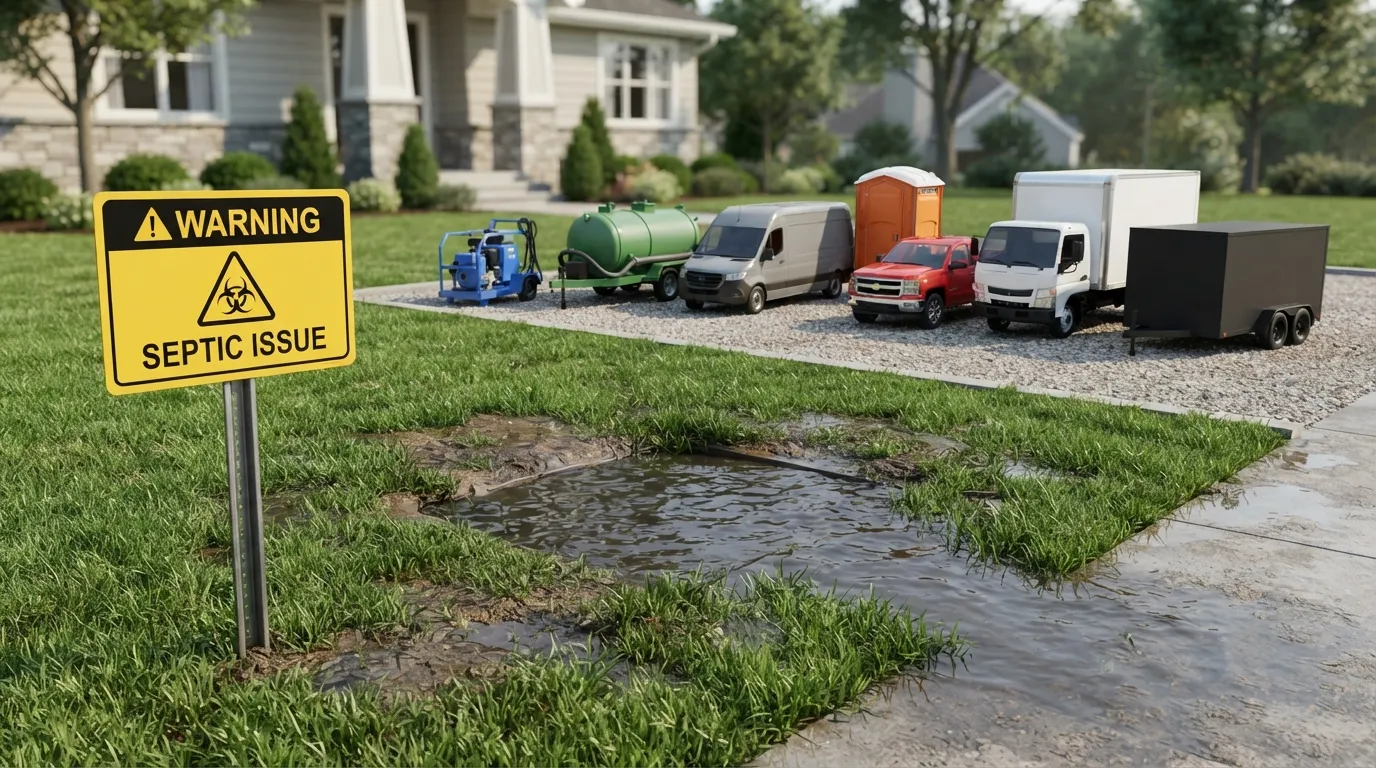
Pooling water or unusually green, spongy grass over the drain field means effluent is surfacing instead of draining into the soil. That is a sign the tank is full, the field is clogged, or both, and it will not resolve on its own. Standing water near the field is also a health concern, since it carries untreated wastewater to the surface where people and pets can contact it. In Sandy Springs, heavy rain can mask this symptom for a few days, so check the field again once the yard dries out. If the water keeps returning, schedule septic tank cleaning rather than waiting for the smell to get worse. Homeowners renovating a bathroom or kitchen during this kind of septic trouble often add a holding tank rental so the household has working plumbing while the tank gets serviced. For anyone unsure how often pumping should happen for their household size, how often to pump a septic tank walks through the math.

Do Sewage Smells Always Mean the Tank Is Full?
Not always, but a strong sewage smell near the tank lid, the drain field or inside the house is one of the more reliable warning signs and should not be ignored. Sometimes the smell points to a cracked vent pipe or a dry P-trap rather than a full tank, but either way it needs a look. Indoors, a sewage odor combined with slow drains almost always traces back to the septic system rather than a one-off clog. If the smell is coming from a grease interceptor instead of a home septic tank, that is a separate issue. A grease interceptor gets pumped once fats, oils, grease and solids reach 25 percent of the liquid depth, and restaurants around Sandy Springs should have that checked on a schedule rather than by smell alone. Grease trap pumping covers that separately from residential septic work. For general property owners, though, a persistent odor is reason enough to call emergency septic service if it shows up suddenly and strongly.

When Should I Call for Emergency Septic Service?
Call right away if sewage is backing up into the house, standing water is spreading fast, or multiple drains stop working at the same time. Those are not wait-and-see situations. A full or failing tank that backs up into a bathtub or floor drain is a sanitation hazard, not just an inconvenience, and it gets worse the longer it sits. Renovation sites and construction crews around Sandy Springs run into this too, particularly when a temporary holding tank rental is feeding a job trailer and gets overlooked during a busy week. If your property depends on well water, remember that OSHA 1926.51(a)(1) requires an adequate supply of potable water at any workplace, so a septic failure near a well deserves fast attention on job sites as much as at home. Anyone running a work crew nearby should also check OSHA portable toilet requirements and general sanitation rules under OSHA 1926.51(c) while dealing with the septic issue, since both often surface during the same inspection.
| Sign | What It Usually Means |
|---|---|
| Slow drains, all fixtures | Tank nearing capacity |
| Gurgling pipes | Air trapped behind wastewater |
| Standing water over field | Full tank or clogged drain field |
| Sewage odor near tank | Full tank or vent pipe issue |
| Lush green patch over field | Effluent surfacing into soil |
How much does it cost to pump a septic tank?
Pricing depends on tank size and access, and septic tank pumping cost breaks down the range for Sandy Springs properties. Septic day-rate service generally runs in the low hundreds. Get a firm number through request a quote once someone has looked at the tank.
Can I use a holding tank while my septic system is repaired?
Yes. A holding tank rental keeps water running during repairs, and it is common on renovation jobs. Pair it with portable restroom rental if the bathroom itself is out of commission during the fix.
How often should a septic tank be pumped?
Every 3 to 5 years for a typical 1,000 gallon residential tank, though household size changes that interval. See how often to pump a septic tank for the specifics that apply to your situation.
Is a sewage smell always an emergency?
Not always, but treat it seriously. Combined with slow drains or standing water, it usually points to a full tank. Call emergency septic service if the smell is sudden or strong.
Do restaurants need separate septic service?
Yes, for grease interceptors specifically. They get pumped at 25 percent fats, oils, grease and solids depth, separate from residential septic tanks. See grease trap pumping for that schedule.
Next step
Get a delivery date
Tell us the address, the dates and the headcount. We size the order and confirm the route.