
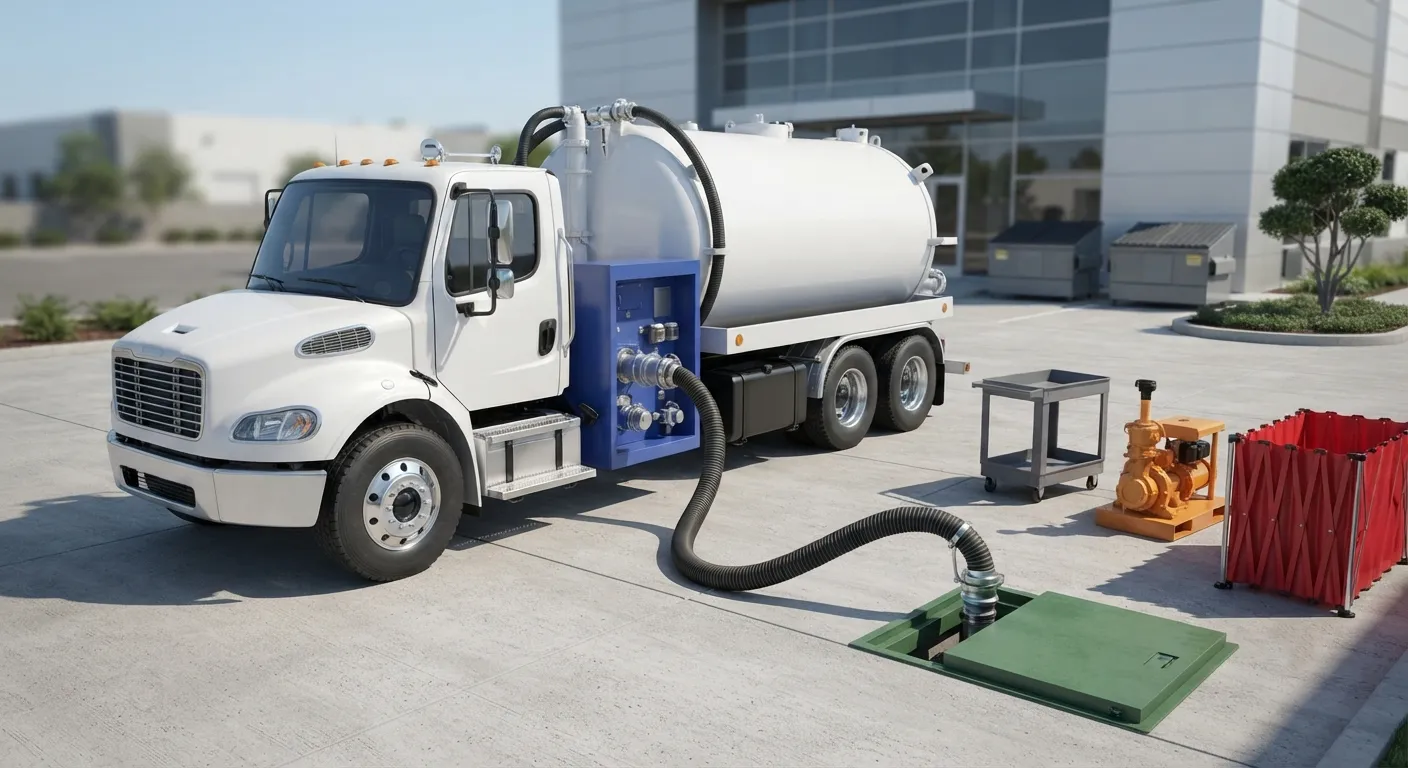
How often does a grease trap need pumping?
It depends on volume, not the calendar. A high-turnover kitchen near the Perimeter fills a trap faster than a small cafe, so Sandy Springs Porta Pros measures depth at each visit instead of guessing, the same close attention we bring to portable restroom rental schedules for busy sites. The 25 percent rule is the trigger point industry-wide, and once you hit it, grease starts moving downstream into the line. That is when calls turn into emergency septic service instead of routine septic pumping service. We track your trap's fill rate over a few visits and settle on an interval that keeps you ahead of it, whether that is monthly or closer to quarterly. Kitchens working through renovation or higher-than-usual volume, like a new build near Brookhaven 6.2 miles south, often need tighter intervals for the first few months. If you are not sure where your trap stands, ask about a baseline inspection before you commit to a contract, much like requesting a request a quote walkthrough before booking any new service. Compare that against how often to pump a septic tank for your home system, since the two run on very different clocks.
What does grease trap pumping cost in Sandy Springs?
Pricing depends on trap size, access, and how often you need us back. Small under-sink interceptors cost less per visit than large in-ground traps serving a full commercial kitchen, and a standing schedule usually costs less per pump than a one-off emergency call, similar to how monthly porta potty rental beats paying for porta potty rental per day on a long job.
| service | duration | typical range |
|---|---|---|
| septic/grease pumping | day visit | $150 to $300 |
| septic/grease pumping | weekend call | $50 to $150 |
| service fee | standing monthly | $100 to $300 |
These bands reflect measured pricing across the region, not a quote for your address, and they sit alongside our porta potty rental cost figures for the same market. Restaurants, breweries, and food trucks working events elsewhere in the metro, including sites 10.7 miles north in porta potty rental in Roswell, GA, fall inside the same ranges, and event organizers often add festival restroom rental units to the same order. For a full property comparison, see septic tank pumping cost.
Do I need a permit for grease trap pumping in Sandy Springs?
Placement and disposal rules for grease waste vary by jurisdiction, and we have not verified a specific Sandy Springs ordinance number for this page, so confirm any permit or discharge requirement directly with the city before your first scheduled pump. What we can confirm: OSHA 1926.51(a)(1) requires potable water at job sites where crews are working, and 29 CFR 1910.141(d)(2) requires soap and towels at handwashing stations, not sanitizer alone, which matters if your kitchen crew is also running a handwashing station rental during a remodel. If your grease trap work overlaps with construction, pair it with construction site services and temporary fence rental to keep the work area contained, and haul debris out with a roll-off dumpster rental parked nearby. For general sanitation counts during a build-out, OSHA 1926.51(c) sets toilet ratios by crew size, worth checking against our OSHA portable toilet requirements guide.
How much does emergency grease trap pumping cost?
Emergency and weekend calls run higher than a scheduled visit, generally landing in the $50 to $150 weekend range for smaller jobs, more for large in-ground traps. Same principle applies to emergency porta potty rental: off-hours service costs more because it pulls a truck off a planned route.
Can Sandy Springs Porta Pros handle commercial grease trap pumping?
Yes. Commercial kitchens, breweries, and food service venues across Sandy Springs are the core of this service, the same customer base that books our portable toilet rental for staff and catering crews. We size the schedule to your volume rather than a fixed calendar and can bundle it with septic tank cleaning for properties running both systems.
What is the difference between a grease trap and a septic tank?
A grease trap catches fats, oils, and grease before they enter the sewer line, sized commercially. A septic tank handles all wastewater from a property and is typically pumped every 3 to 5 years depending on tank size and household size, a different cycle entirely, closer in scope to our septic pumping service than to grease work.
Do I need a holding tank during grease trap service?
Some kitchens rent a holding tank rental unit to keep operations running while the trap is serviced or repaired, and larger renovation jobs sometimes add a storage container rental for equipment on site. It is not required for a routine pump but helps during longer maintenance windows.
How do I know if my grease trap is overdue?
Slow drains, sewage odor near the kitchen floor drain, or a rise in wastewater backing up are the usual signs. Check septic tank warning signs for the broader list; several apply directly to grease interceptors too, and our FAQ page covers a few more edge cases.
Next step
Get a delivery date
Tell us the address, the dates and the headcount. We size the order and confirm the route.